JAI DURGA

Home > Blog Details
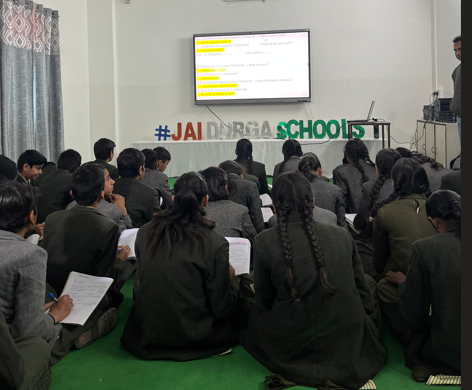
Digital learning is transforming traditional classrooms into smart, interactive learning spaces. At Jai Durga School, recognized as the Best School in Jaipur, a trusted Top School in Jaipur, and a leading School in Jaipur, we integrate smart classes, e-learning programs, and advanced digital tools with strong academic values. As a reputed English Medium School in Jaipur and an affordable school on Amer Road, Jaipur, we focus on academic excellence, holistic development, modern infrastructure, experienced faculty, and admissions open for future-ready education.
The advantages of online education have enhanced digital learning among schools because education has become flexible and available in the form of mobile learning applications, digital classrooms, and virtual classroom technology. E-learning apparatus, interactive learning apparatus and customized learning platforms are education tools that students utilize with the assistance of AI. In line with best practices of remote learning, schools create better online engagement among students and develop the digital literacy of students. Such digital pedagogical solutions represent the innovation in contemporary education and they fit the trends of EdTech 2026, which determine the future of education technology and demonstrate the significant influence of technology in the field of education.
Digital learning in schools has become a reality through the use of a virtual classroom, which is a component of digital learning. The e-learning tools, interactive learning tools, and digital teaching methods are used by teachers on platforms that are available through mobile learning apps. Online live discussions, polls, and projects help to more fully engage students in learning and adhere to best practices of remote learning. These techniques demonstrate the current innovation of education and the trends of EdTech 2026, indicating the high influence of technology in education and representing the future of education technology to all learners across the globe.
Blended learning is a teaching approach utilized in schools to integrate traditional and digital learning to make it a balanced form of teaching. Teachers can teach in the classrooms by referring to the e-learning tools, videos, and simulations as interactive learning tools. Students are able to make revisions of topics through the use of mobile learning applications and specialized learning platforms at any time through virtual classroom technology and digital classrooms. Such online teaching techniques enhance learning, promote collaboration, and make the process of learning more flexible, effective, and student-centered without losing the importance of face-to-face education.
The application of AI in education is one of the components of EdTech trends 2026, which is changing online education in schools. The AI-based personalized learning systems take this data to analyze student performance and weaknesses and provide a tailored study plan. It promotes the use of virtual classroom technology using smart tutors, automated assessment, and instant feedback. AI can also be used to enhance the best practices in remote learning through the delivery of interactive lessons and adaptive tests. As technology continues to gain influence in the education system, AI assists teachers in concentrating on mentoring to enhance digital literacy in students and empower learning to be smarter, quicker, and more inclusive.
In the modern, highly tech world, digital literacy among students is mandatory and a fundamental aspect of digital learning in educational institutions. It enables learners to be responsible and competent in bridging e-learning tools, mobile learning applications, and virtual classroom technology. In the digital classrooms, students are taught online research skills, cyber safety, and critical thinking. This helps in the advantage of online learning as it makes learning safe and more productive. The increasing role of technology in education and education innovation in the era modernizes students to pursue further studies, careers, and a digitally connected future.
Contemporary teaching has now incorporated the innovativeness of digital teaching and contemporary teaching innovations. Smart boards, virtual labs, and interactive devices of learning in classes make intricate ideas in science and mathematics less complicated. To make the lessons more visual and interactive, the teachers include e-learning tools, animations, and simulations, and use computer classrooms. These strategies enhance online student interest, as well as blended learning techniques. Technological influence in the education sector has changed the conventional approach of teaching into participatory, experience-based, and skills-based learning to ensure that the students are ready to embrace the future of education technology.
Online study has enhanced student engagement significantly through online learning by making the classes more interactive and entertaining. Students are engaged rather than listening through interactive learning tools, gaming activities, graphics, and simulations. Technological virtual classrooms and digital classrooms promote discussions, collaboration, and creativity. This enhances problem-solving, critical thinking, and communication. Technology in education has favored learning platforms in which the learning process can be personalized, with students learning at their own pace. Altogether, online learning in schools renders the education process more purposeful, realistic, and future-oriented.
Digital learning in schools has some challenges despite its growth. Lack of devices or a steady internet connection prevents the benefits of online education and access to e-learning provisions among many students. The reliance on the virtual classroom and computer-based classrooms will bring about technical issues and learning disruptions. Too many mobile learning applications add to screen time and health problems. Low levels of digital literacy among the students may complicate the online learning process. Remote learning best practices need to be observed in schools to guarantee inclusion. To resolve these concerns, it is important to ensure that the effect of technology in education is balanced with the well-being of students.
AI in education, immersive virtual reality, and elaborate personalized learning platforms will define the future of education technology. According to EdTech trends 2026, smarter classrooms will be digital, better technology will be available in virtual classrooms, and there will be smarter mobile learning applications. Schools will be more dependent on the blended learning approaches, in which interactive learning tools will improve online student engagement. Learning will be more competence-based, flexible, and learner-centered. This is a new concept in education that will revolutionize the teaching process, and education will be more accessible, inclusive, and technologically advanced for all students.
Online education in institutions is changing the contemporary way of learning by rendering education more accessible, interactive, and productive. Education will be wiser and more future-proof with the e-learning tools, virtual classroom technology, AI in education, and blended learning strategies. Schools should also persist in implementing modern education innovations to equip students with the digital world